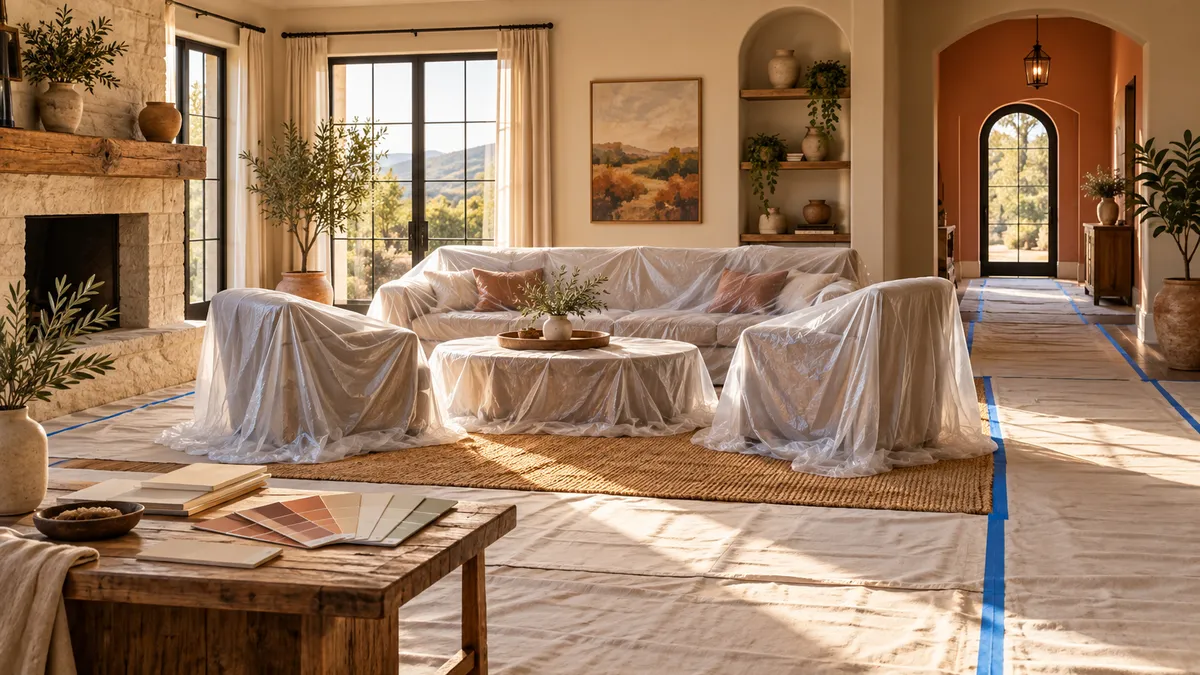
How to Prepare Your Home for Interior Painting Without the Last-Minute Rush
Interior painting feels much easier when the first morning is already organized. The biggest delays often begin with small unanswered questions: Which picture hooks should stay? Where will the dog spend the day? Is the hallway ceiling included? Before work starts, turn those loose ends into a short room-by-room plan. For an occupied San Antonio home, useful preparation means protecting belongings, preserving everyday access, and giving everyone the same understanding of the finished result. You do not have to empty the entire house to make those decisions.
Walk the rooms with a specific goal
Start with the reason each room is being painted. A guest room refresh may need different attention than a heavily used hallway with damaged corners. Write down walls, ceiling, baseboards, doors, and closets separately. “Paint the bedroom” can otherwise mean several different things to different people.
Photograph existing damage and identify anything you want retained, including height marks, mounted shelves, or a distinctive accent wall. Check behind furniture where practical. Note stains without assuming their cause. A suspicious damp area belongs on the assessment list before anyone schedules cosmetic work. The result should be a scope you can point to, rather than a collection of assumptions.
Agree on who moves and protects what
Remove small valuables, loose decorations, and items with personal importance yourself when possible. Discuss heavy furniture before the crew arrives. A bookcase full of books, a wall-mounted television, and a piano each need a more specific plan than “move furniture.” Confirm whether moving, protection, and replacement are included.
Choose a storage spot that will stay outside the work route. Bag and label small hardware by room. Photograph complicated arrangements before taking them apart. Decide which artwork will return to the same location so useful hanging points are not mistakenly filled. If electrical fixtures need alteration, arrange appropriately qualified help instead of adding that task informally on painting day.
Separate household tidying from surface preparation
Clearing countertops and putting laundry away helps access. Preparing the wall itself is a separate part of the painting scope. Ask who handles washing, loose coating, small holes, larger repairs, and dust removal, and how those tasks will be checked.
Benjamin Moore’s wall-preparation guidance emphasizes clean surfaces and removing cleaner residue before painting. Avoid applying household polish or a new cleaning product shortly before the crew arrives without discussing it. If a wall has a recurring stain or repair, share its history. That information can change the preparation plan. A room that looks tidy may still need substantial surface work, so keep those two checklists distinct.
Make color and finish decisions together
Settle the color name, color number, product, and sheen for each surface in writing. Include the ceiling and trim even when they will remain white; different whites can be surprisingly noticeable beside one another. Keep an approved sample in the room so decisions do not depend on a phone photograph.
Discuss what happens if you change your mind after material is purchased or work begins. Also decide whether an existing accent wall remains an accent or joins the surrounding color. If different household members are choosing colors, designate one person to communicate the final selection. A single current list prevents an older text message from becoming the accidental instruction.
Protect the daily routine and the work zone
Map a clear route to the rooms you need, then identify an alternative place for calls, meals, and sleep if necessary. Let the painter know about pets, work-from-home hours, mobility needs, and rooms that must remain accessible. Keep children and pets outside active work areas, including places where tools are stored.
Ask about ventilation and room re-entry using the selected products’ instructions. Low odor does not establish that a room is ready for unrestricted use. EPA indoor-air guidance recommends ventilation during painting. Avoid treating an open interior door or ordinary recirculating air conditioning as a complete ventilation plan; discuss a suitable approach for the actual home and conditions.
Review the morning-of checklist and older-home cautions
Before work begins, check parking, entry instructions, a usable water source if needed, and who receives questions during the day. Keep exit routes available and separate delivery drop-offs from the work area. Confirm how the crew will leave tools and partially completed rooms at the end of each day.
If the home was built before 1978, discuss lead before sanding or disturbing paint. EPA recommends lead-safe certified help for renovations in pre-1978 homes. Do not begin scraping old finishes as a head start. Finally, walk through the plan together: surfaces, retained hardware, repairs, approved colors, protection, and the expected handover process. Ten organized minutes can prevent several avoidable interruptions.
Plan your interior painting project
Bring your room list, preferred colors, and any access concerns to the first conversation. A clear preparation plan makes it easier to discuss the actual work and build a schedule around your household. Contact Art Vandelay Painting or call 210-940-0055 to discuss your San Antonio, Greater North San Antonio, or Hill Country home.
Image: Original illustrative concept; not an actual customer or completed project.
